Buy vernetzen.eu ?
We are moving the project
vernetzen.eu .
Are you interested in purchasing the domain
vernetzen.eu ?
domain@kv-gmbh.de · 0541-91531010
Buy vernetzen.eu ?
Which relationship is inversely proportional? Please check the appropriate box.
The relationship between two variables is inversely proportional when one variable increases while the other variable decreases, and vice versa. **
Is a "the more, the less" relationship always inversely proportional?
No, a "the more, the less" relationship is not always inversely proportional. This phrase simply means that as one quantity increases, the other quantity decreases. In an inversely proportional relationship, the two quantities change in opposite directions at a constant rate. However, in some cases, the relationship may not be strictly inversely proportional, as the rate of change may not be constant. Therefore, it is important to analyze the specific context and data to determine the nature of the relationship. **
Similar search terms for Inversely Relationship
Top-Angebote
Products related to Inversely Relationship:
-
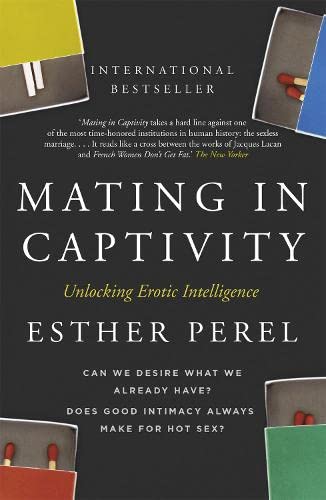
Hodder & Stoughton Mating in Captivity by Esther Perel - Paperback Relationship Psychology Book - Desire, Intimacy & Long-Term LoveMating in Captivity is Esther Perel's exploration of desire within long-term relationships. Drawing on decades as a couples therapist, Perel asks why security and passion often pull against each other, and what couples can do to keep eroticism alive once domestic routine sets in. This thought-provoking read blends clinical case studies with accessible prose, making it a staple recommendation for therapists and relationship counsellors. The book examines modern relationships, which promise lifelong companionship, deep intimacy, and lasting erotic connection, but often work against these goals. Esther Perel draws on over three decades of clinical practice to explore the complexities of desire and relationships. Published by Hodder & Stoughton, this paperback is a must-read for anyone in a committed relationship.3,99 £*Shipping: 2,99 £Secure redirect to the provider
-
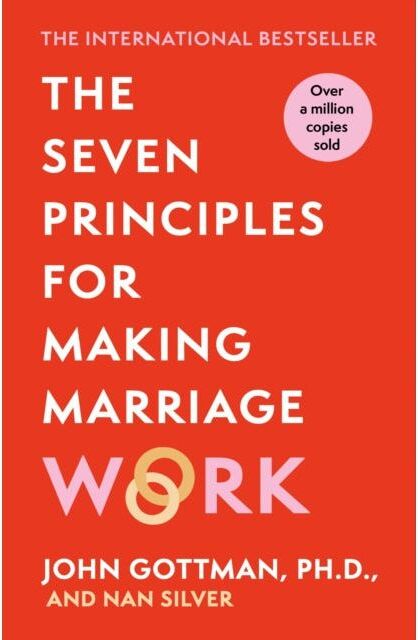
Orion The Seven Principles For Making Marriage Work: A practical guide from the international bestselling relationship expertThe revolutionary guide to show couples how to create an emotionally intelligent relationship - and keep it on trackStraightforward in its approach, yet profound in its effect, the principles outlined in this book teach partners new and startling strategies for making their marriage work.Gottman has scientifically analysed the habits of married couples and established a method of correcting the behaviour that puts thousands of marriages on the rocks. He helps couples focus on each other, on paying attention to the small day-to-day moments that, strung together, make up the heart and soul of any relationship. Packed with questionnaires and exercises whose effectiveness has been proven in Dr Gottman's workshops, this is the definitive guide for anyone who wants their relationship to attain its highest potential.4,49 £*Shipping: 1,99 £Secure redirect to the provider
-
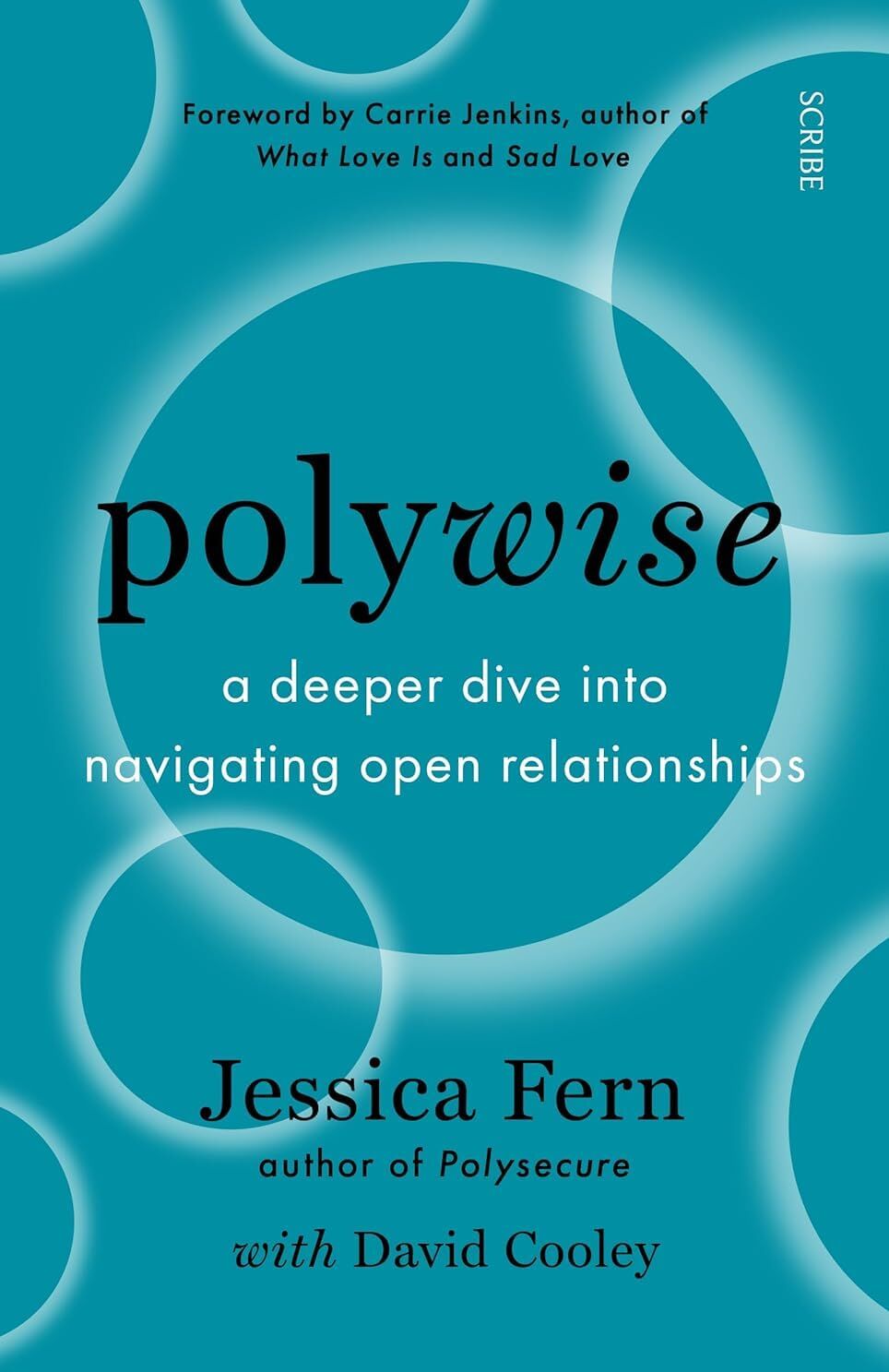
Scribe Polysecure & Polywise by Jessica Fern - 2 Books Collection Set - Paperback - Attachment Theory & Consensual Non-Monogamy Relationship GuidesThis two-book paperback set brings together Jessica Fern's ground-breaking Polysecure and its follow-up, Polywise, co-written with David Cooley. Together they offer a complete, evidence-informed roadmap for building emotionally secure, trusting relationships beyond traditional monogamy. Ideal for polyamorous individuals, couples, therapists, and anyone interested in attachment theory in the context of consensual non-monogamy, this collection pairs foundational theory with practical, real-world tools for navigating the challenges of loving more than one person well. The books explore attachment, trauma, and consensual non-monogamy, providing a deeper understanding of these complex issues.22,99 £*Shipping: 2,99 £Secure redirect to the provider
-
Bluebird Where's My Happy Ending? by Anna Whitehouse & Matt Farquharson - Paperback - Sunday Times Bestselling Relationship Guide - Honest, Funny AdviceWhere's My Happy Ending? is a candid exploration of what it really takes to make a relationship last. Written by Anna Whitehouse and Matt Farquharson, this book blends real interviews, personal confession, and sharp wit to answer the questions every couple secretly asks. Perfect for those navigating love and marriage, it's an entertaining read for modern adults.6,99 £*Shipping: 2,99 £Secure redirect to the provider

-
What does inversely proportional mean?
Inversely proportional means that as one quantity increases, the other quantity decreases at a consistent rate. This relationship is represented by the equation y = k/x, where y and x are the two quantities and k is a constant. Inversely proportional relationships are characterized by the fact that when one quantity doubles, the other quantity is halved, and vice versa. **
-
Can you give an example of a relationship that is neither proportional nor inversely proportional?
One example of a relationship that is neither proportional nor inversely proportional is the relationship between the amount of time spent studying and the grade received on a test. In this case, spending more time studying does not always result in a directly proportional increase in the grade, nor does it result in an inversely proportional decrease in the grade. Other factors such as the difficulty of the material, the student's understanding of the material, and test-taking skills can also influence the grade received on the test, making the relationship more complex and not easily defined as either proportional or inversely proportional. **
-
What is an inversely proportional function?
An inversely proportional function is a relationship between two variables in which one variable increases as the other decreases, and vice versa. Mathematically, this relationship is represented by the equation y = k/x, where y is the dependent variable, x is the independent variable, and k is a constant. As x increases, y decreases, and as x decreases, y increases. This type of relationship is often seen in phenomena such as the relationship between time and speed, where as time increases, speed decreases, and vice versa. **
-
How are drop height and acceleration related and why is this relationship neither proportional nor inversely proportional?
Drop height and acceleration are related in that the higher the drop height, the greater the acceleration experienced by the object. This relationship is neither proportional nor inversely proportional because acceleration is not directly dependent on drop height alone. Factors such as the mass of the object, air resistance, and gravitational force also play a role in determining the acceleration of an object during free fall. Therefore, the relationship between drop height and acceleration is more complex and cannot be simplified to a direct or inverse proportionality. **
Which assignment is inversely proportional? Please check the box.
The assignment that is inversely proportional is the one that has a negative correlation between the two variables, meaning as one variable increases, the other decreases. **
Is a person's height statistically inversely proportional to their life expectancy?
There is no direct statistical relationship between a person's height and their life expectancy. While some studies have suggested a correlation between shorter height and lower life expectancy, this relationship is not solely determined by height. Factors such as genetics, lifestyle choices, access to healthcare, and socioeconomic status all play a significant role in determining life expectancy. Therefore, it is important to consider a variety of factors when assessing life expectancy rather than focusing solely on height. **
Top-Angebote
Products related to Inversely Relationship:
-
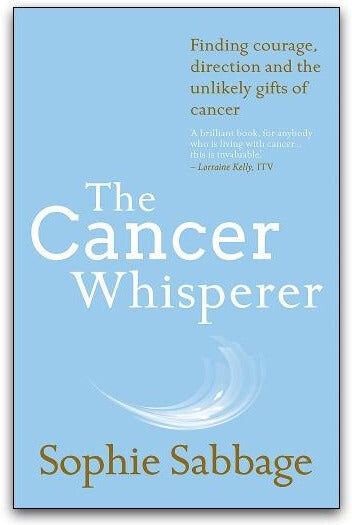
HODDER PUBLISHING The Cancer Whisperer by Sophie Sabbage – Transform Your Relationship with CancerSophie Sabbage was diagnosed with late stage 'incurable' lung cancer in October 2014. She was 48 years old, happily married with a 4-year-old daughter. Since that day - when doctors told Sophie that her prognosis was poor - she has been on a remarkable journey of healing and transformation that has reshaped her vocation as well as changed her life for the better. The Cancer Whisperer chronicles Sophie's extraordinary relationship with cancer and the methods that she has used for dealing with fear, anger, denial and grief. The essence of 'cancer whispering' was born of Sophie's determination to take cancer off the battlefield and into the classroom. Instead of going to war with it, Sophie has chosen to listen to it, learn from it and choose her own response to it. Sophie offers a radically different way of relating to this disease both mentally and practically: she shares the research she has done, the treatments she has chosen, the diet she follows and the resources that she feels have made the biggest differences in the hope that they will help others cut through the mass of information out there.4,49 £*Shipping: 1,99 £Secure redirect to the provider
-
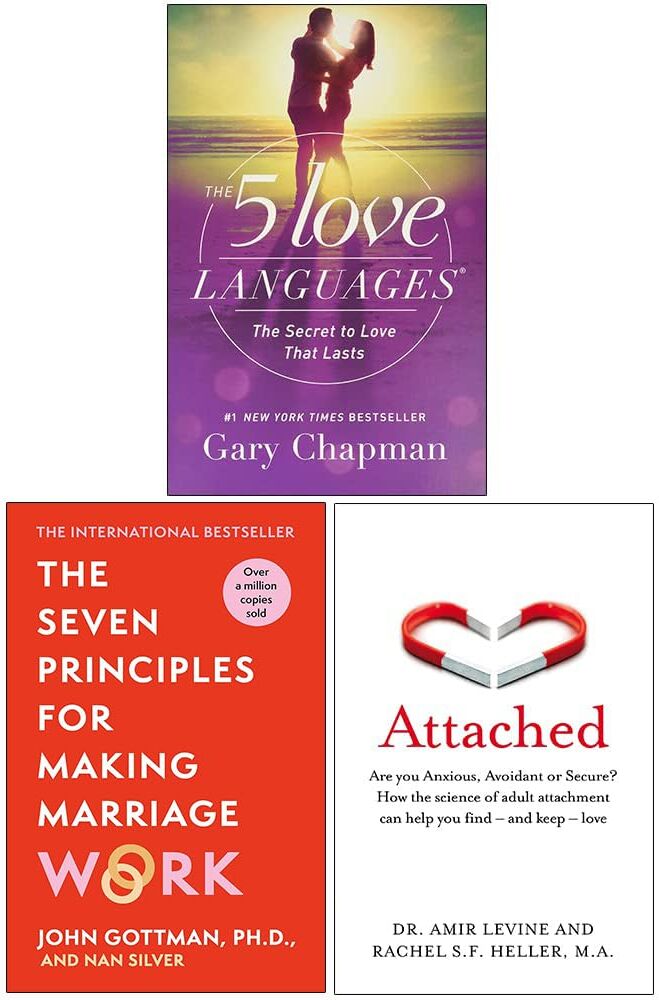
Orion The 5 Love Languages, Seven Principles for Marriage & Attached 3 Book Set – Relationship & Love Guide CollectionThe 5 Love Languages, The Seven Principles For Making Marriage Work, Attached 3 Books Collection Set The 5 Love Languages: In the #1 New York Times bestseller The 5 Love Languages, you'll discover the secret that has transformed millions of relationships worldwide. Whether your relationship is flourishing or failing, Dr. Gary Chapman's proven approach to showing and receiving love will help you experience deeper and richer levels of intimacy with your partner--starting today. The Seven Principles For Making Marriage Work: Gottman has scientifically analysed the habits of married couples and established a method of correcting the behaviour that puts thousands of marriages on the rocks. He helps couples focus on each other, on paying attention to the small day-to-day moments that, strung together, make up the heart and soul of any relationship. Attached: Pioneered by psychologist John Bowlby in the 1950s, the field of attachment explains that each of us behaves in relationships in one of three distinct ways: Anxious people are often preoccupied with their relationships and tend to worry about their partner’s ability to love them back.Avoidant people equate intimacy with a loss of independence and constantly try to minimize closeness.Secure people feel comfortable with intimacy and are usually warm and loving.19,99 £*Shipping: 2,99 £Secure redirect to the provider
-
Hodder & Stoughton Mating in Captivity by Esther Perel - Paperback Relationship Psychology Book - Desire, Intimacy & Long-Term LoveMating in Captivity is Esther Perel's exploration of desire within long-term relationships. Drawing on decades as a couples therapist, Perel asks why security and passion often pull against each other, and what couples can do to keep eroticism alive once domestic routine sets in. This thought-provoking read blends clinical case studies with accessible prose, making it a staple recommendation for therapists and relationship counsellors. The book examines modern relationships, which promise lifelong companionship, deep intimacy, and lasting erotic connection, but often work against these goals. Esther Perel draws on over three decades of clinical practice to explore the complexities of desire and relationships. Published by Hodder & Stoughton, this paperback is a must-read for anyone in a committed relationship.3,99 £*Shipping: 2,99 £Secure redirect to the provider
-
Orion The Seven Principles For Making Marriage Work: A practical guide from the international bestselling relationship expertThe revolutionary guide to show couples how to create an emotionally intelligent relationship - and keep it on trackStraightforward in its approach, yet profound in its effect, the principles outlined in this book teach partners new and startling strategies for making their marriage work.Gottman has scientifically analysed the habits of married couples and established a method of correcting the behaviour that puts thousands of marriages on the rocks. He helps couples focus on each other, on paying attention to the small day-to-day moments that, strung together, make up the heart and soul of any relationship. Packed with questionnaires and exercises whose effectiveness has been proven in Dr Gottman's workshops, this is the definitive guide for anyone who wants their relationship to attain its highest potential.4,49 £*Shipping: 1,99 £Secure redirect to the provider
-
Which relationship is inversely proportional? Please check the appropriate box.
The relationship between two variables is inversely proportional when one variable increases while the other variable decreases, and vice versa. **
-
Is a "the more, the less" relationship always inversely proportional?
No, a "the more, the less" relationship is not always inversely proportional. This phrase simply means that as one quantity increases, the other quantity decreases. In an inversely proportional relationship, the two quantities change in opposite directions at a constant rate. However, in some cases, the relationship may not be strictly inversely proportional, as the rate of change may not be constant. Therefore, it is important to analyze the specific context and data to determine the nature of the relationship. **
-
What does inversely proportional mean?
Inversely proportional means that as one quantity increases, the other quantity decreases at a consistent rate. This relationship is represented by the equation y = k/x, where y and x are the two quantities and k is a constant. Inversely proportional relationships are characterized by the fact that when one quantity doubles, the other quantity is halved, and vice versa. **
-
Can you give an example of a relationship that is neither proportional nor inversely proportional?
One example of a relationship that is neither proportional nor inversely proportional is the relationship between the amount of time spent studying and the grade received on a test. In this case, spending more time studying does not always result in a directly proportional increase in the grade, nor does it result in an inversely proportional decrease in the grade. Other factors such as the difficulty of the material, the student's understanding of the material, and test-taking skills can also influence the grade received on the test, making the relationship more complex and not easily defined as either proportional or inversely proportional. **
Similar search terms for Inversely Relationship
-
Scribe Polysecure & Polywise by Jessica Fern - 2 Books Collection Set - Paperback - Attachment Theory & Consensual Non-Monogamy Relationship GuidesThis two-book paperback set brings together Jessica Fern's ground-breaking Polysecure and its follow-up, Polywise, co-written with David Cooley. Together they offer a complete, evidence-informed roadmap for building emotionally secure, trusting relationships beyond traditional monogamy. Ideal for polyamorous individuals, couples, therapists, and anyone interested in attachment theory in the context of consensual non-monogamy, this collection pairs foundational theory with practical, real-world tools for navigating the challenges of loving more than one person well. The books explore attachment, trauma, and consensual non-monogamy, providing a deeper understanding of these complex issues.22,99 £*Shipping: 2,99 £Secure redirect to the provider
-
Bluebird Where's My Happy Ending? by Anna Whitehouse & Matt Farquharson - Paperback - Sunday Times Bestselling Relationship Guide - Honest, Funny AdviceWhere's My Happy Ending? is a candid exploration of what it really takes to make a relationship last. Written by Anna Whitehouse and Matt Farquharson, this book blends real interviews, personal confession, and sharp wit to answer the questions every couple secretly asks. Perfect for those navigating love and marriage, it's an entertaining read for modern adults.6,99 £*Shipping: 2,99 £Secure redirect to the provider
-
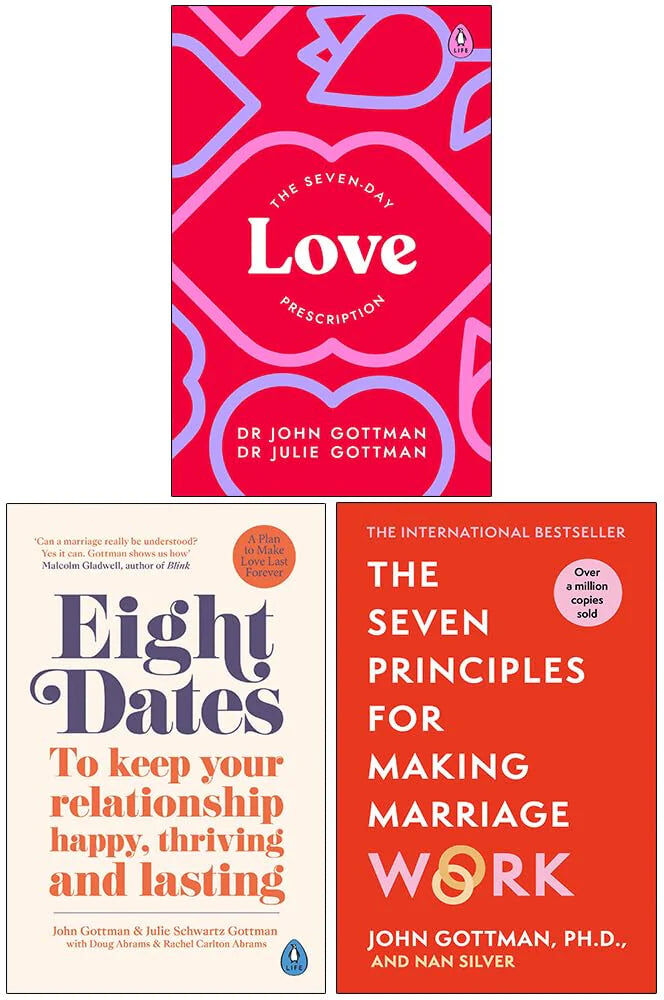
Various Publishers Gottman 3 Books Set: Seven-Day Love Prescription, Eight Dates & Seven Principles - Paperback Relationship Collection for CouplesThis 3-book paperback collection brings together the most trusted relationship guidance from Drs. John and Julie Gottman, the world-renowned couples researchers behind The Gottman Institute. Combining a seven-day action plan, eight structured conversation-starting dates, and the classic principles behind lasting marriages, this set gives couples a complete, research-backed toolkit. It's an ideal gift for engagements, weddings, anniversaries, or anyone wanting to strengthen their relationship using proven psychological science. Each title in this collection distills decades of clinical research from the Gottmans' renowned 'Love Lab' into practical, everyday tools. The Seven-Day Love Prescription offers a fast, structured seven-day plan, while The Seven Principles For Making Marriage Work provides a comprehensive guide to building a lasting relationship.28,99 £*Shipping: 2,99 £Secure redirect to the provider
-
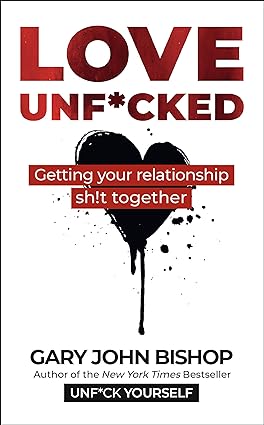
Yellow Kite Love Unf*cked by Gary John Bishop - Paperback Self-Help Book - Tough-Love Relationship Guide for Adults - NewLove Unf*cked by Gary John Bishop is a straight-talking guide to relationships. Rather than offering quick fixes or feel-good platitudes, Bishop argues that lasting love starts with taking full responsibility for your own behavior. Written in his trademark irreverent, tough-love style, this book is for anyone in a relationship, coming out of one, or trying to understand why love often goes wrong. Gary John Bishop makes the case that the missing piece isn't more information about your partner or your past – it's a willingness to look honestly at yourself. This paperback edition is a brand new release from Yellow Kite, a publisher of adult books.3,99 £*Shipping: 2,99 £Secure redirect to the provider
-
What is an inversely proportional function?
An inversely proportional function is a relationship between two variables in which one variable increases as the other decreases, and vice versa. Mathematically, this relationship is represented by the equation y = k/x, where y is the dependent variable, x is the independent variable, and k is a constant. As x increases, y decreases, and as x decreases, y increases. This type of relationship is often seen in phenomena such as the relationship between time and speed, where as time increases, speed decreases, and vice versa. **
-
How are drop height and acceleration related and why is this relationship neither proportional nor inversely proportional?
Drop height and acceleration are related in that the higher the drop height, the greater the acceleration experienced by the object. This relationship is neither proportional nor inversely proportional because acceleration is not directly dependent on drop height alone. Factors such as the mass of the object, air resistance, and gravitational force also play a role in determining the acceleration of an object during free fall. Therefore, the relationship between drop height and acceleration is more complex and cannot be simplified to a direct or inverse proportionality. **
-
Which assignment is inversely proportional? Please check the box.
The assignment that is inversely proportional is the one that has a negative correlation between the two variables, meaning as one variable increases, the other decreases. **
-
Is a person's height statistically inversely proportional to their life expectancy?
There is no direct statistical relationship between a person's height and their life expectancy. While some studies have suggested a correlation between shorter height and lower life expectancy, this relationship is not solely determined by height. Factors such as genetics, lifestyle choices, access to healthcare, and socioeconomic status all play a significant role in determining life expectancy. Therefore, it is important to consider a variety of factors when assessing life expectancy rather than focusing solely on height. **
* All prices are inclusive of VAT and, if applicable, plus shipping costs. The offer information is based on the details provided by the respective shop and is updated through automated processes. Real-time updates do not occur, so deviations can occur in individual cases. ** Note: Parts of this content were created by AI.